Ph.D., Industrial (Human Factors) Engineering & Collaborative Specialization in Engineering Education, University of Toronto, Canada, 2016–2021
MASc., Electrical Engineering focused on a Biomedical Engineering application, University of Toronto, Canada, 2012–2015
BASc., Electrical Engineering, University of Toronto, Canada, 2007–2012
About the instructor:
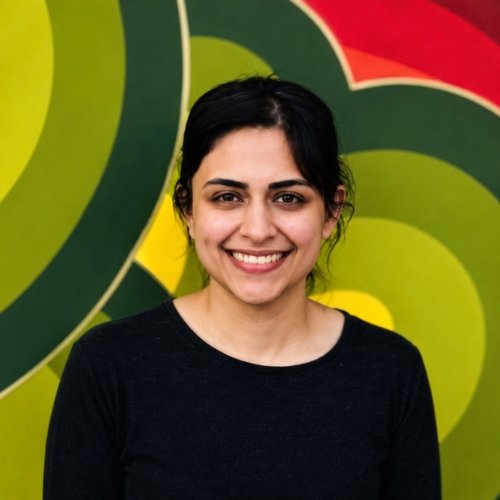
Dr. Bahar Momanian is an interdisciplinary educator and researcher with over 15 years of experience. She is an active tutor at Canadian tutoring organizations, with a decade of experience teaching Ontario and IBC curriculum, and teaching at higher education institutions in Canada and the United States.
Example areas of tutoring (high school, college, university [undergraduate and graduate] levels):
Math:
IB (HL, SL) math, stat, AP calculus AB & BC, AP statistics
Pre-calculus 11/12, math 9, 10
Preparation for AMC 8/10/12, math contest (Gauss, Pascal, etc.), SAT, GRN Subject, ACT, GMAT
Exam prep SSAT math
Calculus, calculus I, II, III, IV
Multivariable calculus and engineering mathematics
Ordinary and partial differential equations
Linear Algebra
Discrete Mathematics
Trigonometry and geometry
Probability and statistics and quantitative techniques
Physics:
Engineering fundamentals
Statics
Dynamics
Circuits
Design process:
Engineering design for capstone
Post-graduate design work
Research design process
Research project management
Technical writing
Teaching Style, Methodology, and Results:
Her philosophy is student-centered, evidence-based, and adaptive. She integrates active learning, problem-based learning, and technology-enhanced instruction to engage students across diverse learning styles. She emphasizes conceptual understanding, real-world application, and reflective practice to foster critical thinking and independent problem-solving. She employs structured lesson plans, interactive tutorials, and formative assessments to monitor progress and provide timely feedback. By incorporating scaffolding and differentiated instruction, she supports learners with varying abilities, ensuring equitable access to knowledge.
Results:
Her students consistently demonstrate measurable gains in comprehension, application, and confidence, often exceeding course benchmarks. She has successfully guided students in mastering complex concepts in engineering, mathematics, and interdisciplinary sciences, and many have transitioned successfully to advanced studies or professional practice.
What Makes Her a Great Teacher:
Her strengths lie in patience, adaptability, and the ability to translate complex material into accessible learning experiences. She cultivates a positive, inclusive, and strengths-based environment where students feel supported, challenged, and empowered to reach their full potential.